From Calling Cards to Group Chats: How Invitations Changed
Calling cards to group chats trace how invitations changed; learn what each format communicates and choose one that suits the occasion and the people invited.
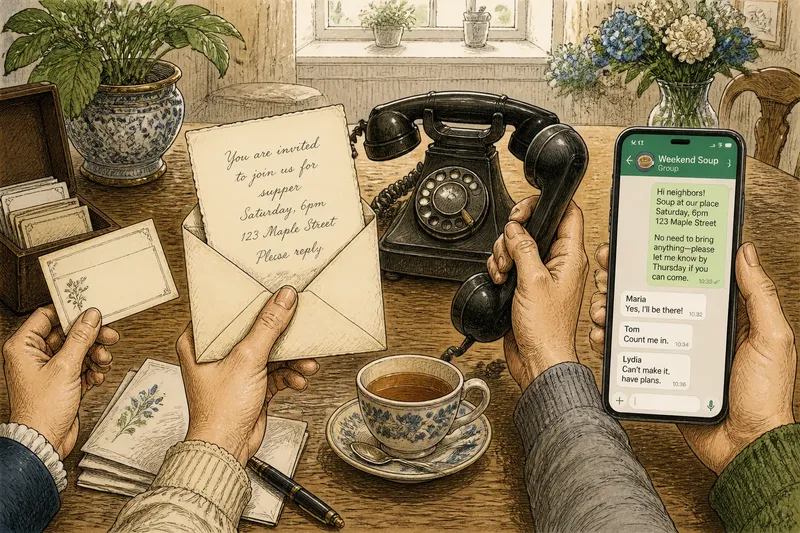
What does an invitation say before anyone replies? The story of calling cards to group chats is less about one format replacing another than about the different traces each leaves in a household. A card can be saved, a call creates a shared moment, and a message thread keeps details handy.
Calling Card Customs
Calling cards served as a compact way to identify a visitor and announce a social call in some households and periods. Their use varied by place, custom, and circumstance, so there was no single universal rule for what a card meant or how it should be handled. They were not party invitations, but they belonged to the same world of domestic communication: people used small, portable objects to make a visit known.
A card made the exchange deliberate. Someone prepared it, carried it, and handed it over or left it according to local custom. The recipient could learn who had called without having to receive the visitor at that moment. That pause is a useful distinction: a message about a visit does not automatically demand immediate access to a home.
Calling cards are best understood as one historical convention among many, not as a uniform household practice. Their precise meaning depended on the community and the situation, just as modern habits around invitations differ between families and friends.
Paper Invitations
A handwritten invitation brought the occasion into focus. A note could name the event, give its place and time, and include a personal phrase that might feel out of place on a printed notice. Opening an envelope also made the invitation itself a small arrival.
Paper suited a gathering where the host wanted to mark the occasion with a tangible gesture. A birthday tea might call for a warm note and a clear address; a formal dinner might call for more restrained wording. The stationery alone did not establish how close two people were, but it could help set the tone.
Paper has a practical trade-off: guests can keep the invitation nearby, but questions or changes call for another exchange. If plans are unsettled, a written card can be less convenient than a format that allows a quick update.
Voice on the Phone
A phone call added tone and a live reply. The host could hear uncertainty, clarify a detail, or offer another day during the same conversation. A guest could answer in their own words instead of composing a formal response.
That immediacy can feel warm between people who speak often, but it can also put someone on the spot. A written invitation gives the recipient room to consider the request before replying; a call may arrive when the person is busy. A considerate caller keeps the invitation easy to accept or decline and is willing to follow up in writing with the details.
Calls also leave a lighter record. If the date, address, or plan matters, a brief text afterward can prevent either person from relying on memory.
Group Chat Invitations
Text messages and group chats keep practical details in a place guests can revisit. A host can share the time, address, and a note about what is planned, while guests can check the thread later. A group message can also help people coordinate among themselves when that coordination is part of the occasion.
The shared thread changes the social feeling. One-to-one messages are direct; a group chat can make a gathering feel collectively underway. But a message to several people may leave each person wondering whether a response is expected or whether the note is only an announcement.
Read receipts and quick replies can create pressure even when no pressure is intended. A clear request, such as asking guests to reply by a particular day, removes the guesswork. If no reply is needed, say that too.
Choosing an Invitation Format?
When does paper make sense?
Paper can suit a milestone, a formal meal, or an occasion where a keepsake feels fitting. It is also useful for someone who prefers not to manage plans through a phone.
Is a phone call too much for casual plans?
Not necessarily; a call can be a natural choice when the plan needs a brief conversation or the recipient appreciates hearing a familiar voice. Keep the invitation low-pressure and send any details that might be easy to forget in writing.
When should I use a group chat?
Use one when guests need to coordinate with one another, such as arranging a shared ride or meal contribution. If the invitation is personal or the guest list does not need a shared conversation, individual messages may feel more fitting.
What should an invitation include?
Name the gathering, give the date, time, and location, and explain any detail that affects whether someone can attend. If you need a reply, say what answer you need and when you need it.
Invitation Format Choices
Choose a format by asking what it needs to do. A card can make an occasion feel marked; a call can make room for conversation; a message can keep details visible. There is no need to treat the medium as a test of etiquette. The point is to communicate in a way that suits the relationship and the plan.
Say you are inviting three neighbors for soup after a weekend walk. The starting details are a Saturday gathering at your home, an address to share, and one guest who has asked whether to bring food. You decide the meal is covered, send each neighbor a text with the date, arrival time, and address, and add, “No need to bring anything—please let me know by Thursday if you can come.” The resulting answer is straightforward: each guest can accept or decline, and the food question is settled without starting a coordination thread. The trade-off is that the neighbors cannot use one shared conversation to arrange a ride; if that becomes necessary, you can start one with their agreement.
For a mixed group, use the channel each person is likely to notice when you know their preference. A relative who rarely checks messages may appreciate a call, while a friend who keeps plans in a calendar may prefer a text with the details. A small adjustment can make the invitation easier to receive without changing the gathering.
Invitation Details
- Gathering: Check whether the invitation names the occasion. If it does, guests can picture the plan; if it does not, add a plain description such as “supper at our place.”
- Date and time: Check that both are stated clearly. If either is missing, add it before sending; otherwise, guests may need to ask for the basic schedule.
- Location: Check that the address and any useful entrance detail are included. If guests may have trouble finding the door, add a buzzer or entrance note; if not, keep the directions simple.
- Reply request: Check whether you need a response and by when. If numbers affect your plan, ask for a yes or no by a stated day; if they do not, tell guests that a reply is optional.
- Food or belongings: Check whether guests are expected to bring anything. If a contribution would help, make the request specific and optional where possible; if nothing is needed, say so to prevent guesswork.
- Updates: Check where the original invitation was sent. If plans change, send the update through that same channel; if the channel is no longer practical, contact each guest directly and confirm they received it.
- Channel fit: Check whether the recipient is likely to notice and use the format. If they prefer calls or paper, choose that; if a written record is more useful, send a text or note.
What is not worth the effort? Trying to make one format communicate every possible feeling. Lovely stationery cannot supply missing logistics, and a busy group thread can bury a simple plan. Give the medium one clear job, then let the wording carry the warmth.
Old and New Habits
Calling cards, handwritten notes, phone calls, and group chats have not simply replaced one another. They leave different traces in domestic life: a card may be kept, a note can be tucked away, a call creates a shared moment, and a thread holds details close at hand. Households move among these options according to the occasion, the relationship, and personal habits.
When you choose how to invite someone, ask what would help that person feel expected rather than managed. Calling cards to group chats is a history of changing forms, but the practical question remains familiar: which channel makes this particular invitation clear and comfortable to receive?