A Rainy Afternoon Built Around One Borrowed Game
Plan a rainy afternoon around one borrowed game with a simple rules plan, careful piece handling, and an easy way to return it in good shape.
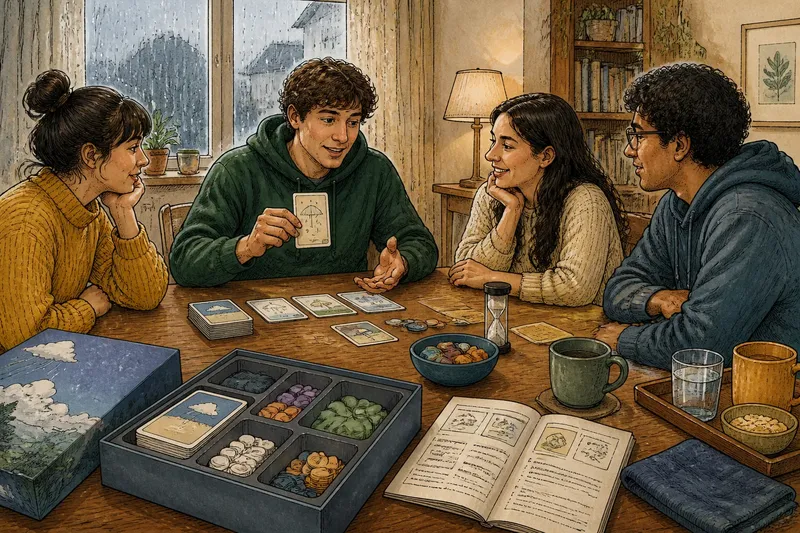
How do you make a rainy afternoon around one borrowed game feel easy, even if you do not know its rules yet? Start with the loan itself: ask what is in the box, choose a version the group can learn, and make a small plan for keeping every piece together. The game can give the visit a shared focus without turning the whole afternoon into a formal event.
Choose the right game
Ask the lender which game they would lend to a group that includes newcomers. A familiar card game, a word game, or a cooperative puzzle may be easier to begin than a game with several phases and detailed scoring. If the box contains different modes, ask which one is simplest and whether it can be paused between turns.
Check the player guidance on the box or ask how the game works with your group. If there are more guests than active turns, find out whether people can join between rounds or whether the game is best played by a smaller group. That answer helps you decide whether to borrow this game or ask for another one.
Borrowing also means taking care of something that is not yours. Ask whether any pieces are missing, unusually fragile, or easy to mix up, and how the owner prefers the game packed afterward. A quick message can prevent an awkward search when the afternoon is over.
Set up for the game
Before guests arrive, open the box and compare its contents with the instructions or the lender’s note. Use a small bowl for tokens and a separate spot for cards or tiles that are not in play. Keep the rulebook and box nearby, but away from drinks and snacks. This is more useful than rearranging the whole room or adding decorations that do not help anyone play.
Clear only the surface the game needs. If it uses a board, leave enough room to reach it without moving other pieces; if it is a card game, a coffee table may be enough. Put food and drinks on a separate tray or side table, especially when the game has small pieces or belongs to someone who is particular about its condition.
What is not worth the effort? Printing custom score sheets, creating a theme, or preparing several backup activities can make a simple loan feel like a production. A clear table, a place for pieces, and the owner’s packing instructions do more to protect the game and keep the afternoon relaxed.
Keep borrowed pieces together
Use the box insert if it has one, and avoid combining similar-looking pieces unless the instructions say to. At the end of a round, return unused items to their compartments rather than leaving them loose on the table. If a piece drops, pause and look under the table and nearby chairs before starting again.
- If the box has labeled compartments, match each piece to its label; if not, group pieces by type in separate bowls or piles.
- If cards have different backs or sets, keep each set in its own stack; if the distinction is unclear, ask the lender before shuffling them together.
- If a small token goes missing, stop play and search the immediate area; if it does not turn up, tell the owner plainly rather than substituting a household object.
- If the game includes a score pad or pencil, keep them beside the rulebook; if either is absent, ask whether the lender expects it returned with the box.
- If food or a drink spills near the game, move the box and pieces away first; if anything is damaged, let the owner know and ask how they want you to handle it.
- If the group is ready to stop, count or sort pieces according to the owner’s instructions; if the instructions are unclear, keep the contents safely together and ask before repacking them in a different arrangement.
What should you ask first?
Can the game pause between turns?
Ask whether a player can step away without disrupting the round. If pausing is awkward, agree to finish the current round before taking a break.
Which rules matter at the start?
Ask the lender to explain the goal and the first move, rather than every special case. Keep the instructions within reach so you can check details when they come up.
How should the box be packed?
Ask whether pieces belong in specific compartments or should be sorted by type. Follow that preference; if the owner does not mind, keep unlike pieces separate so they are easy to identify later.
What if a piece is missing now?
Check the contents with the lender’s list or while they are present, if possible. If something is already absent, tell the owner before play and agree on whether the game is still suitable for the afternoon.
Start with a small round
Read the goal and basic turn instructions together, then try one practice turn if the rules feel unfamiliar. Explain what a player needs to do next, and look at the rulebook when a special situation arises. A short start is often kinder to newcomers than a long explanation of every possible move.
Say you borrow a cooperative word game with cards, a timer, and a small pile of clue tokens; these details are invented for the example. You ask the lender whether the tokens are complete and whether a round can pause, then place the cards in one stack and the tokens in a bowl. At the table, you explain the goal, demonstrate a clue, and begin with a practice turn. When someone asks to pause, you finish that turn and set the cards aside together. The result is a clear stopping point and a more orderly box to check before it goes home.
Keep the rules conversation practical. If a detail is unclear, look it up instead of guessing about a game that belongs to someone else. If the instructions allow a house rule, agree on it before play so everyone knows what to expect.
Pack it for the return
When the group is ready to stop, finish the round if that suits the game, then sort the pieces using the owner’s preferred arrangement. Look beneath the table and chairs, check the bowl and card stacks, and compare the contents with any list or diagram in the box. If you are unsure whether something belongs, leave it with the game and ask rather than discarding it.
Send the lender a brief note if anything is missing, damaged, or packed differently than expected. A clear message is more considerate than hoping the owner will not notice. Then return the box as agreed, with the rules and any included accessories kept together.
For a rainy afternoon built around a borrowed game, the most useful preparation is knowing how to begin and how to put the loan back in order. Once those details are handled, the group can play at its own pace—and the game can leave your home as thoughtfully as it arrived.